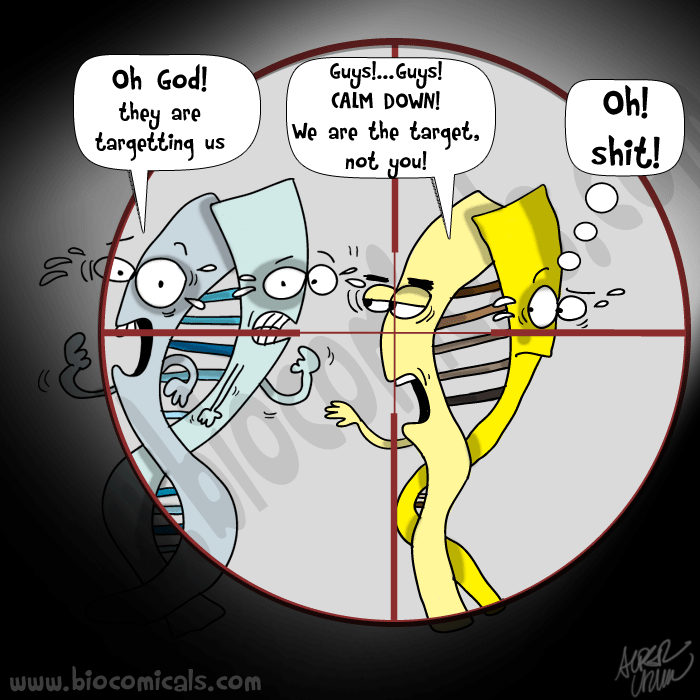
Targeting specific regions rather than doing whole genome sequencing my be an advantage. We may have more coverage by focusing reads on our area of interest.
Before starting sequencing, before analyzing enormous data..be the force with you guys! :)
The expression "May the Force be with you" has achieved cult status and is symbolic of the Star Wars legacy. The line has been said by at least one character in each of the Star Wars movies. [Wikipedia]
Info for non-science readers: SNPs are one of the most common types of genetic variation. A SNP is a single base pair mutation at a specific locus, usually consisting of two alleles (where the rare allele frequency is >1%). SNPs are found to be the etiology of many human diseases. SNP genotyping is the measurement of genetic variations of single nucleotide polymorphisms (SNPs) between members of a species. It is a form of genotyping, the measurement of the genetic variation more generally. Exome sequencing is an efficient strategy to selectively sequence the coding regions of the human genome to identify novel genes associated with rare and common disorders. RNA-seqis a revolutionary tool for transcriptomics refers to the use of high-throughput sequencing technologies to sequence cDNA in order to get information about a sample's RNA content, a technique that is quickly becoming invaluable in the study of diseases like cancer.